
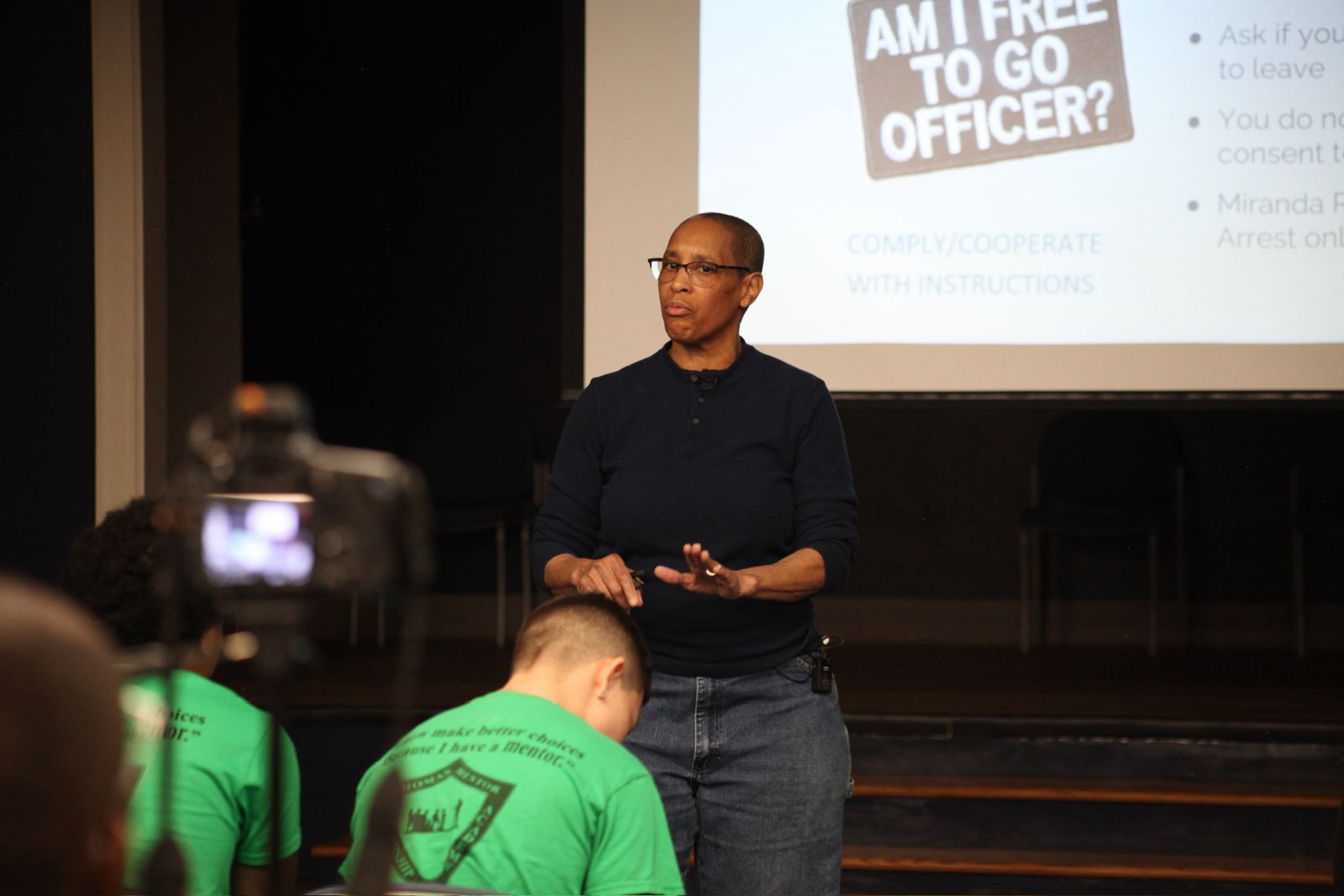
Training/Workshopsfor Community Membersand Law Enforcement
Our purpose is to address how the community understands, experience and respond to police encounters, their knowledge of policing, exercising constitutional rights, respect and awareness for both sides of the badge. Our objective for community members to be better equipped to understand what is happening during the encounter, what they can control, what options they have and take informed action afterwards when necessary.
In partnership with NABCJ
N.C. Chapter of the National Association of Blacks in Criminal Justice
Just-Us Review Council — Community Policing for All
Individual Readiness
For community members
You & Five-O, LLC (YFO) was created to help community members survive police interactions. The primary goal was to Get Home. This information was being delivered from a police executive who understood policing and represented the community who often felt unseen or abused by the judicial system. After eleven years of listening to thousands of community members primarily African-Americans, they taught (BJ) You & Five-O what was important for them to know and understand. So it's no longer what YFO thinks the community needs to know, it's what the community has been telling (BJ) YFO over the last eleven years what THEY need to know.
The Individual Readiness training is not about changing views or experiences of police, it's about getting you Home. The conversation is candid. It does not sugarcoat for the police or community members. This topic isn't rushed. BJ's priority and hope is that participants at a minimum feel they were heard. Our training is relevant from to those in middle school to beyond. We remind community members it's a Hueman behind the badge who wants to go home too.
A minimum of 2 hrs up to 4 hrs. Times may depend on number of attendees and engagement.
Returning Community Members
Welcome Home
Our Returning Community Members training. The training is not different, it's that most of the participants have actual lived experience in the judicial system. You & Five-O has been volunteering with Our Children's Place at the Orange Correctional Facility for five years. BJ strongly believes that our returning community members need to understand they have not lost their right to exercise their rights. YFO wants to help returning community members to understand how to exercise their rights as they begin their new journey back home. YFO supports returning community members and any organizations that supports them. Welcome Home.
Behind the Badge
For law enforcement
Understanding the Community Behind the Encounter
Our purpose is to provide officers an opportunity to hear recurring concerns expressed by community members to You & Five-O. It is an opportunity for officers to understand some community members distrust did not begin with them. Our objective will be that officers will be better prepared to understand how history, police incidents, fear, media, etc. and perceptions of police conduct may influence local encounters. The training also provides officers a candid environment to discuss their own frustrations in policing during heightened distrust.
This law enforcement training is based on YFO taking what we've heard from thousands of community members. We are taking that information back to law enforcement so they have an opportunity to hear and understand those Top Five recurring concerns about police interactions from community members. This training is not about everything law enforcement is doing wrong. It's an opportunity to help officers understand what some community members may be carrying into the encounter with them and why. Understanding that reality doesn't require an officer to accept inappropriate behavior or abandon their lawful responsibilities.
YFO hopes to give insight to officers that the community members reaction isn't about the Hueman wearing the uniform, they are reacting to what the uniform represents to them. The challenge is how to serve without taking that personally.
The Behind the Badge training for law enforcement is based on what BJ has heard from 4k plus participants since 2015, primarily African-Americans, on their view of police and what they want to know. This is for law enforcement only. This is a space for them to hear how the community feels about the industry of policing, not the person in the uniform. This is a very candid conversation as well. BJ, has policed the community and now has listened to the community that is being policed and taking what she's heard back to the Badge. This isn't anti-police training its giving insight and understanding that it isn't personal to the person behind the badge. It's about simply understanding that all Huemans want to go home.
This training is a full day, may be over several days depending on the size of the agency.
“An officer’s ability to communicate with an individual whose culture is different from their own is critical to establishing a trusting relationship. By partnering with You & Five-O, our officers were able to attend a course that taught different aspects of various cultures. Because of the training, our officers are better equipped to meet the needs of our community.”
“According to data from The Bureau of Justice Statistics’ (BJS) Census of State and Local Law Enforcement Agencies, 2008, there were 17,985 state and local law enforcement agencies across this country. Eighty-six percent (15,500) of these state and local agencies have fewer than 50 personnel. If we are going to transform the lens through which we view interactions between law enforcement and communities – Black and Brown communities in particular – it will begin at small and rural police departments across the country, and it will require all of us to reform our thinking in how we collectively approach and solve the current breakdown in these interactions. That is what the YFO training for police departments and presentations for community organizations will address.”
“When local police departments embrace the community policing philosophy, and communities understand their role in it, both parties can work toward trust and mutual respect. When this initial step is taken, and when it’s accompanied by diversity and cultural training within law enforcement, YFO believes relationships between law enforcement and the citizens they serve can be improved.”
The Top Five
Community members' concerns
01
Knowledge of policing
02
Community voice and accountability
03
Reactions to misconduct and unprofessionalism
04
Confidence in exercising constitutional rights
05
Respect for the humanity on both sides of the badge
The Four Principles
The law enforcement industry has committed and aspires to have an agency culture and philosophy based on four central principles known as procedural justice to guide how they deliver service to their communities. In short procedural justice means when communities view police authority as legitimate, they are more likely to cooperate with police and obey the law.
Treating people with dignity and respect
Giving citizens a voice during encounters
Being neutral in decision making
Conveying trustworthy motives
Hmmmmm notice anything about the Community Members Top Five & Law Enforcements Four Principles? Neither seem to be asking for completely different things, maybe it's just different words describing some of the same needs.
YFO believes it sounds like Community Policing. They Both Want to GO Home
Just-Us Review Council Community Playbook
The Just-Us Review Community Playbook training for community leaders and organizations to help them understand that proactively engaging with law enforcement prior to a crisis will make them more informed and unified. These tools help communities ask better questions to create solutions that benefit everyone.
The Just-Us Review Council Community Playbook training is to help community leaders and organizations prepare to effectively respond before and during critical incidents. The training will be done in partnership with the N.C. Chapter of the National Association of Blacks in Criminal Justice (NABCJ) it would and could include retired and active experts across the justice spectrum. We are not telling community leaders what to think, we're helping community members to understand what to ask their local agency.